AI Platform & Engineering Enablement Lead · AI-First Engineering · Data Platforms · 11+ Years
Same principles at every scale — infrastructure as code, containerize everything, automate away toil, monitor proactively, and design for reliability so a small team can manage a large surface area.
Home lab infrastructure
Two-node setup (Raspberry Pi + Ubuntu server) running 30+ containerized services. Self-healing, zero-touch operation with automatic DNS, backups, rebuilds, and wake-on-demand.
Deep dive — Full architecture details
Infrastructure & networking
- Raspberry Pi as always-on gateway + Ubuntu server on-demand via Wake-on-LAN
- Headscale (self-hosted Tailscale control plane) for secure mesh VPN across all devices
- Caddy reverse proxy with automatic HTTPS, dynamic config generation, and a "lazy service" pattern — containers auto-wake on first HTTP request
- FreeDNS dynamic DNS updates every 15 min for the public endpoint
- IPC mechanism: file-based trigger + LAN broadcast (UDP) to wake and orchestrate the server from the Pi
CI/CD & configuration
- Ansible playbooks managing both nodes with roles: common, pi_server, plex_server, ubuntu_desktop
- Cron jobs, Docker setup, configs, SSH, and systemd units all templated via Jinja2
-
Git webhook listener (Flask) receives GitHub webhooks,
triggers
docker compose build && up - Everything version-controlled in one monorepo
Data & backups
- Centralized JSON store (custom containerized service) with git-based auto-commit + push every minute
- Nightly cloud backups to pCloud + Google Drive via rclone, with log aggregation and Telegram notifications
- Docker system prune scheduled weekly for cleanup
- Healthcheck.io integration for uptime monitoring of all critical services
Bots & automation
- Telegram bot (serverbot): server start/stop, backup triggers, task reminders, Ring intercom integration, unified command system
- ntfy for push notifications across devices
- Changedetection.io for web page monitoring
- Tampermonkey scripts served from static nginx for browser automation
AI / LLM stack
- Hermes Agent: multi-agent orchestration (Python), deployed for multiple real users via Telegram gateway
- Plugin architecture with tool registries, interactive browser control via Playwright
- YAML-driven config generation for per-domain scraper agents
- LLM helper container (local inference or proxy), Whisper ASR for speech-to-text
- SearXNG as private meta-search engine (also usable as tool by LLM agents)
Containerized services
- Custom-built: webhook listener, Telegram bot, JSON store, document converter, LLM helper, Docker manager dashboard, Hermes agent
- Off-the-shelf: Plex, Jellyfin, *arr stack, SearXNG, Excalidraw, Flatnotes, OnlyOffice, Stirling PDF, FileBrowser, Audiobookshelf, pyLoad, ytptube, Romm, and more
Key points
- Self-healing / zero-touch: lazy wake, auto-rebuild on push, auto-backup, auto-DNS — the system largely runs itself
- IaC discipline: everything is Ansible-managed, templated, and version-controlled in one monorepo
- Multi-user AI product: Hermes isn't just a toy — it's deployed for real users with a Telegram interface, plugin system, and browser automation
- Cost-conscious architecture: Pi as always-on gateway + WoL server = low power bill while running 30+ services
Production data platform — AI-driven dev lifecycle
PayFit España, Nov 2022 – Jun 2026. De facto tech lead of a 2–3 person team. Full ownership of infrastructure, ingestion, orchestration, warehouse — and an agent-driven development lifecycle that owned the loop from request to merged PR across our Terraform, ArgoCD, and Python/Airflow repos. Work that took days landed in hours. Took a platform with daily failures to near-zero incidents.
Client names anonymized — architecture patterns and technology choices are my own.
Deep dive — Full platform details
Role & scope
- De facto tech lead of a small data engineering team (2–3 people), mentoring 1 junior
- End-to-end ownership: infrastructure, ingestion, orchestration, warehouse management, developer tooling, and the agent-driven dev lifecycle on top of it all
- Led the full Redshift-to-Snowflake migration — architecture design, execution, and cutover
- Reliability transformation: inherited a platform with daily pipeline failures; stabilized to near-zero incidents — failures now are almost exclusively third-party source issues
- Delivery transformation: typical feature/fix cycle compressed from days or weeks to hours or minutes by handing the dev loop to agents
Infrastructure & deployment
- Terraform for all infrastructure-as-code (AWS resources, Snowflake configuration)
- Kubernetes (AWS EKS) as the compute layer — all workloads run as isolated pods
- Karpenter for dynamic node provisioning and autoscaling
- ArgoCD for GitOps-based continuous deployment — syncs desired state from git to EKS cluster
- Helm charts maintained by the team for self-hosted Airbyte and Airflow
- AWS: Secrets Manager, S3 (data lake/staging), SQS (cross-account), ECR (container registry)
Data ingestion (20+ sources)
- DLT (data load tool) as the primary ELT framework — migrating from Singer due to Python dependency deprecation
- Self-hosted Airbyte (Helm-managed on EKS) for managed connectors
- Custom real-time pipeline: cross-account SQS → Lambda → Kinesis Firehose → S3 → Snowpipe auto-ingestion
- Source diversity: SaaS APIs (20+), internal MongoDB, government APIs, internal APIs, Google Sheets via gspread
Warehouse & analytics
- Snowflake: warehouse sizing, role-based access control (RBAC), resource and cost management
- dbt enablement for Data Analytics Engineers — maintain the environment, review models, support self-service transformation
- Streamlit apps self-hosted on EKS — business users write Python to build interactive dashboards on top of the warehouse
Observability & reliability
- Slack alerts on pipeline failures and anomalies
- Datadog for logging and infrastructure monitoring on top of native tool dashboards
- Proactive reliability focus: from daily failures to near-zero unforced errors — this reliability is what enables a 2-person team to maintain 20+ source integrations
Developer experience & CI/CD
- GitHub: repository management, branch protection, PR workflows — with webhooks as the entry point of the agent loop
- Pre-commit hooks for linting and code format enforcement
- Automated test suites running in CI
- AI-powered code review (CodeRabbit) plus our own agents reacting to PR comments, review threads, and CI failures
- Containerized dev environments matching production (EKS parity) — the same containers agents run in
Agent-driven development lifecycle
- Hermes as the operator-facing orchestration layer — humans and agents both talk to the platform through a single chat surface; routing, memory, and approval gating live there
- CrewAI crews (architecture · development · review · on-call) for the multi-agent flows where role separation matters — planner / coder / reviewer / merger collaborating against shared context
- LangGraph for the deterministic structured flows: triage → plan → implement → self-review → respond, with branching for migration work, hotfixes, and infra-only changes (Terraform plan gating before apply)
- OpenHands as the autonomous coding agent: picks up issues and PR comments, edits across our Terraform, ArgoCD, and Python/Airflow repos, opens PRs against the right branch, iterates on review feedback until green
- GitHub webhooks as the trigger surface — new issues, PR comments, review threads, and CI failures all fan out to the agent fleet for reactions, reviews, and follow-up commits
- Custom MCP servers wired into Airflow, Snowflake, EKS, ArgoCD, GitHub, dbt, and Datadog — agents pull logs, recent run state, dbt manifests, lineage, and pod events on demand to debug failures instead of guessing. Each tool has typed input/output and structured error codes so weak models can recover
- Semantic data catalog (RAG over pgvector) indexing dbt manifests, Snowflake DDL, Airflow DAG history, and past incidents — agents retrieve "how did this pipeline look last time it worked" before proposing a fix
- Langfuse for end-to-end LLM observability: every crew run, tool call, prompt version, token cost, latency, and outcome traced and diffable. Drives our offline eval harness (golden-set regressions, LLM-as-a-judge scoring) so prompt and model changes ship like code does
- Anthropic Claude (4.x) as the production model for planning and review; smaller / cheaper models routed in for narrow tool-call hops via a provider abstraction
- Human-in-the-loop approval gating for anything irreversible (Terraform apply on prod, Snowflake DDL, external comms) — agents draft, humans confirm
- One loop spans all our repos and languages — Terraform/HCL, ArgoCD application manifests, Helm charts, Python Airflow DAGs, dbt SQL, Streamlit apps — with per-repo guardrails baked into prompts and tool wrappers
- Agent-run delivery pipeline, request → merged PR: a large request is decomposed into architecture decision records, gap-checked against the code as it actually is, and exploded into small single-responsibility tasks agents build. The decomposition decides what gets built, so tight task scope is the quality lever
- PR automation: automated PR preparation, a splitter that cuts an oversized PR along its dependency graph, an architecture reviewer that proposes changes rather than waiting to be asked, and human-in-the-loop gates only where a human must decide
- Security at batch scale: dependency-vulnerability backlogs grouped by ecosystem and similarity and shipped as a handful of PRs instead of dozens; chaos-engineering runs automated on disposable clusters
- Agent governance, written down: behaviour specs for both sides of the loop — what agents may do unprompted, how humans hand work over — plus per-repo overlays
- Guardrails as code: 114 CLI verbs and 52 pre-tool-use hooks (writing-quality gates, co-tenancy guards, push gates). Prompts live as folders and files in a file manager turned prompt IDE
- Outcome: typical feature or fix cycle collapsed from days or weeks of human-only work to hours or minutes of human-supervised agent work
Greenfield data platform — European e-commerce retailer
Designed and built the company-wide big data infrastructure from scratch. Decoupled analytics from a 20-year-old production Oracle database, eliminating availability risk and slashing costs.
Company details anonymized — major European online retailer with large-scale e-commerce data.
Deep dive — Context & impact
The problem
- Legacy 20-year-old Oracle database was the single source of truth for the entire company
- Any non-trivial analytical query against Oracle would degrade or take down production pages
- The business needed to query data freely without impacting customers
The solution
- Built a data mirroring pipeline from Oracle into the AWS big data ecosystem
- Enabled the entire company to query data at will — at a fraction of the Oracle licensing and operational cost
- Decoupled analytics from production, eliminating the availability risk entirely
- Stack: Python, AWS, Docker, Kubernetes, FluxCD (GitOps), Argo Workflows, Vue.js for internal tooling
Key points
- Greenfield ownership: not inheriting — designing and building from zero for a company-wide audience
- Business impact: directly solved a production stability issue while unlocking self-service analytics
- Cost optimization: replaced expensive Oracle query load with cloud-native architecture at lower cost
- Career arc: built from scratch at this role → stabilized/scaled an existing platform at the next one → runs a 30-service home lab solo
Engineering DNA — Same instincts at every scale
Whether it's a production data platform on AWS or a Raspberry Pi at home, the same principles apply. This table maps the consistent engineering behaviors across professional and personal infrastructure.
| Pattern | ● Professional | ● Home lab |
|---|---|---|
| IaC everything | Terraform + Helm | Ansible + Jinja2 |
| GitOps auto-deploy | ArgoCD + GitHub CI | Webhook + auto-rebuild |
| Containerized workloads | K8s Pod Operator on EKS | Docker Compose on Pi |
| Reverse proxy | EKS Ingress / Karpenter | Caddy + lazy wake |
| Secrets management | AWS Secrets Manager | Ansible vault + env |
| Auto backups | S3 lifecycle policies | rclone nightly to cloud |
| Monitoring | Datadog + Slack alerts | Healthcheck.io + ntfy |
| Multi-source ingestion | DLT / Airbyte / SQS | Hermes agent scrapers |
| Enabling non-tech users | Streamlit + dbt | Telegram bot for family |
| AI-first engineering | AI Code Review + Claude/GPT | Hermes multi-agent system |
Apps showcase
Full-stack applications built end-to-end with AI-assisted workflow automation. Each app was designed, built, and iterated using AI under experienced supervision — from architecture decisions to deployment. All apps are responsive, mobile-friendly, and served securely via Tailscale mesh VPN.
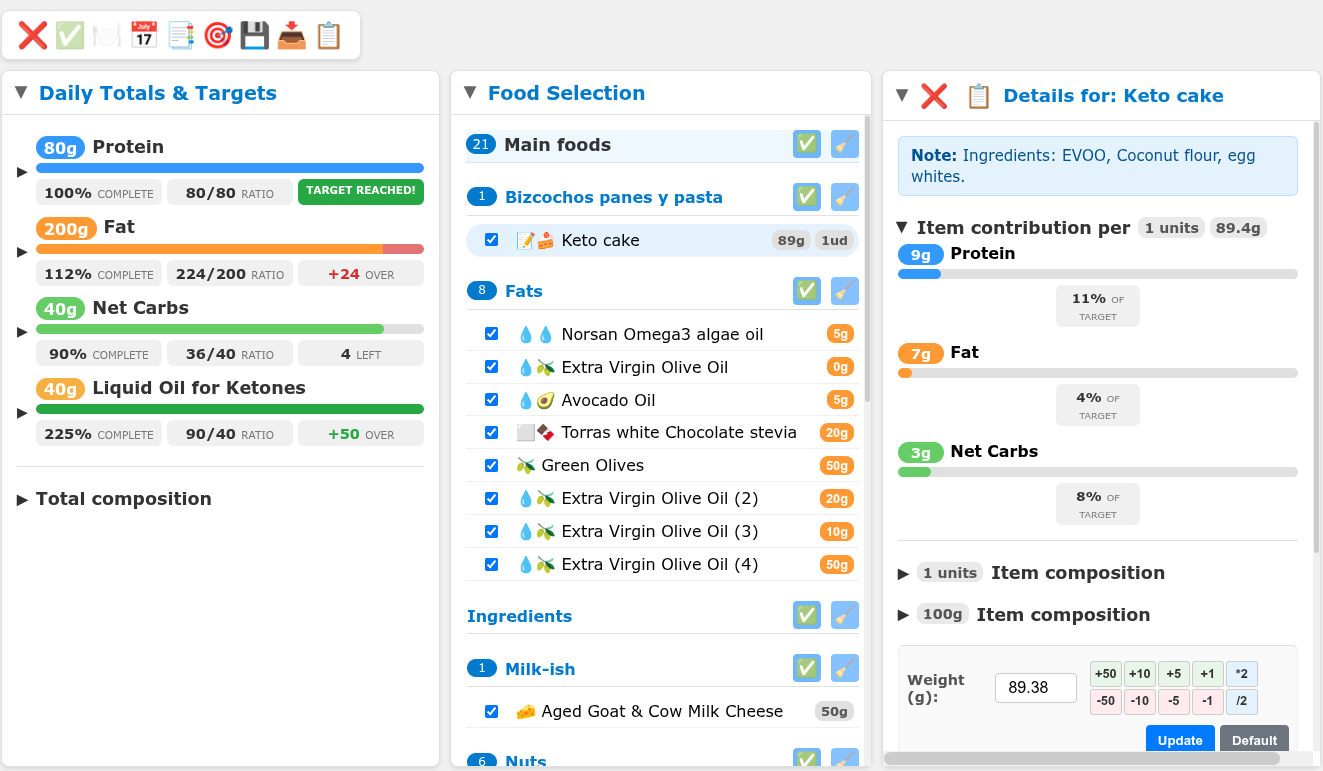
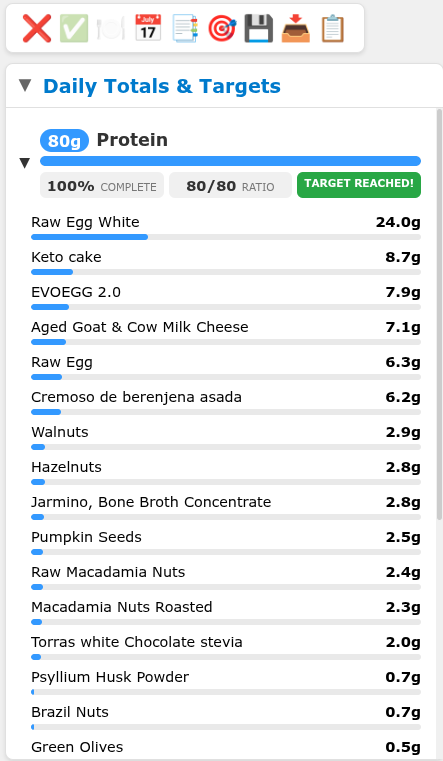
Food macro tracker
Nutrition tracking app with daily macro targets, food database, per-item nutritional breakdown, and total composition tracking. Keto-friendly with net carbs and liquid oil for ketones targets.
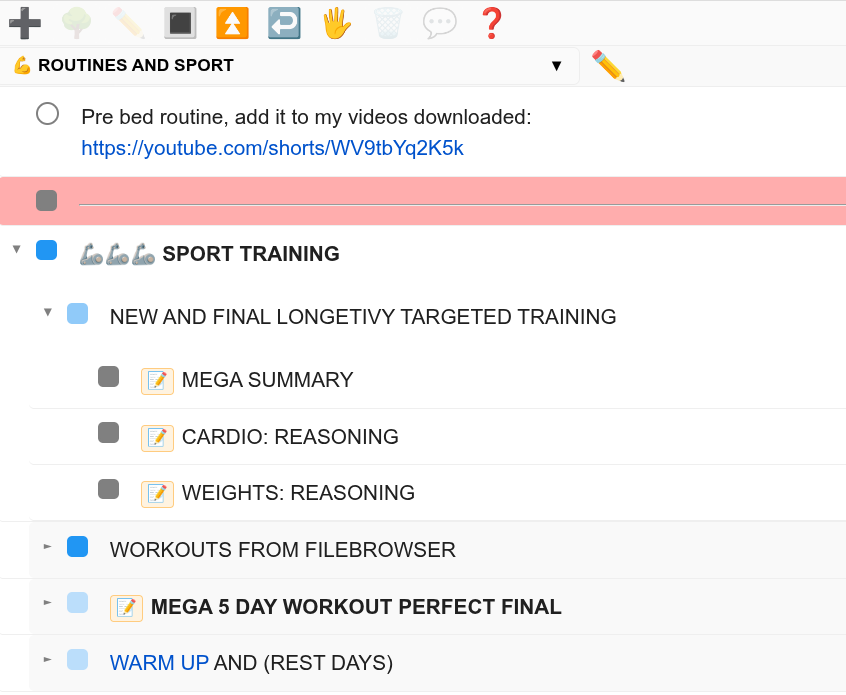
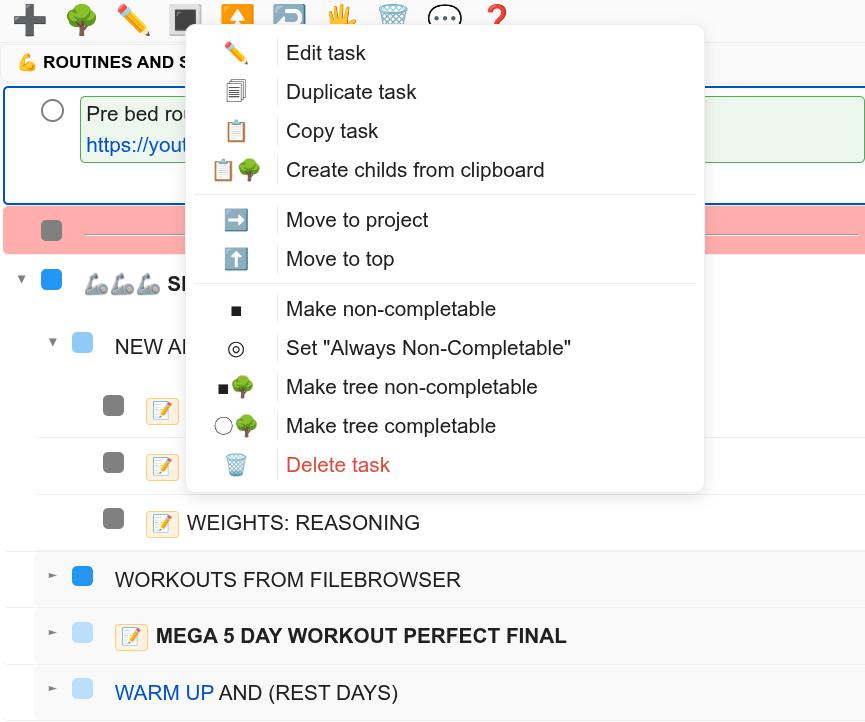
Todo app
Task management application with nested categories, drag-and-drop organization, rich task editing modal, and priority management. Designed to replace off-the-shelf solutions with a tailored workflow.
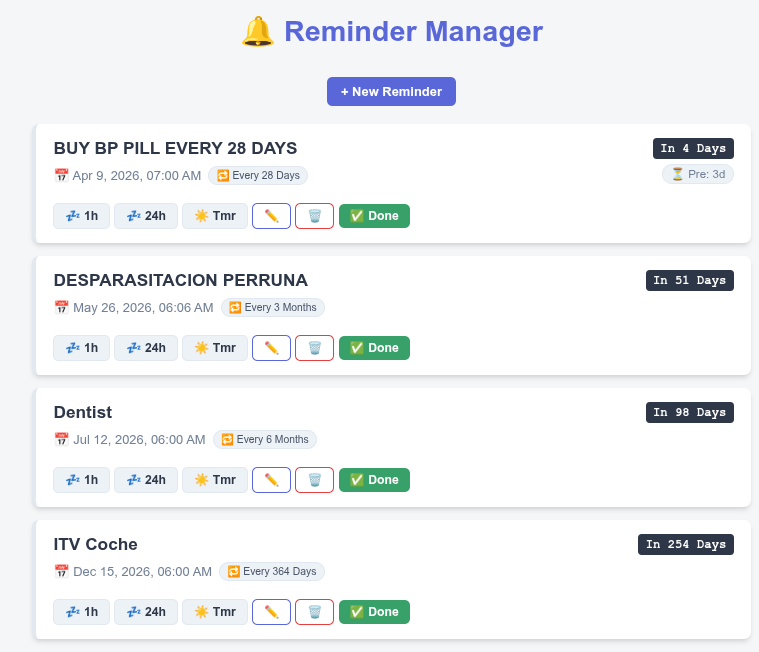
Reminder manager
Recurring task reminder system with configurable intervals (hourly, daily, custom), Telegram notification integration, countdown display, and snooze controls. Tracks everything from medication to vehicle inspections.

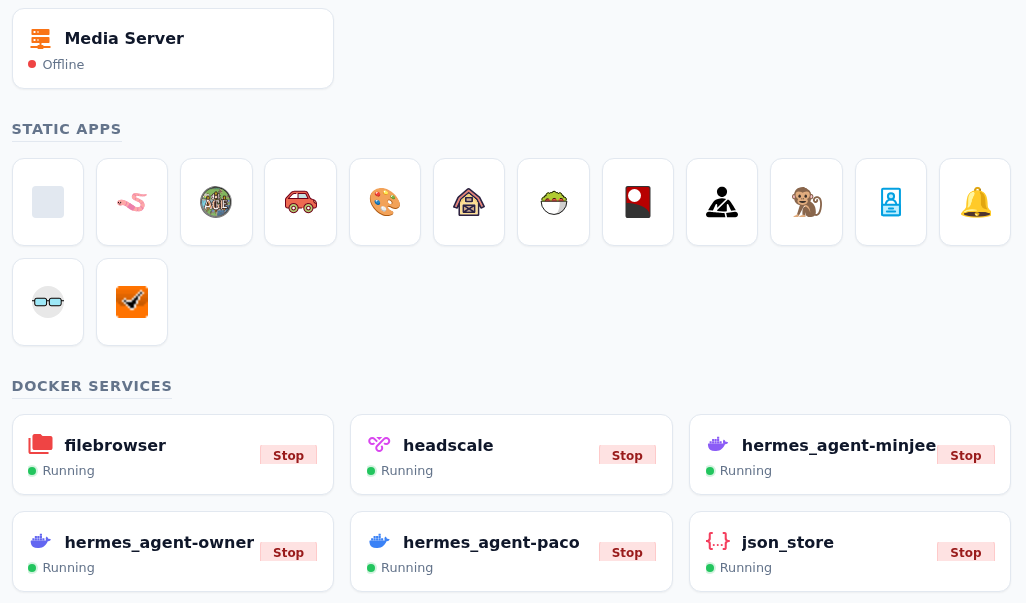
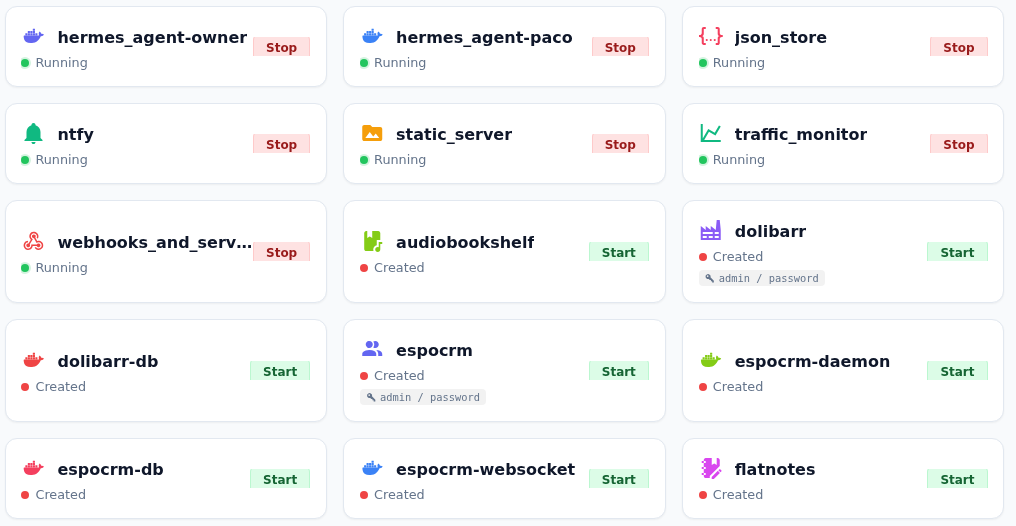
RaspiHub — Docker manager dashboard
Custom dashboard for managing the home lab infrastructure. Real-time system metrics (CPU, memory, load, uptime), Docker container status with start/stop controls, static app launcher, and media server management.
Knowledge cards
Flashcard-based knowledge retention app for studying and reviewing concepts. Organize cards into decks, flip through them in study mode, and track progress.
Career timeline
From civil engineering to self-taught developer to senior data engineer — a consistent pattern of owning large infrastructure scope and making systems run themselves.
- Building safe, scalable AI workflows into day-to-day engineering
- Owning IT, plus SOC 2 and ISO 27001 compliance
- Built an agent-run delivery pipeline from request to merged PR: large requests decomposed into architecture decision records, gap-checked against the code as it actually is, and exploded into single-responsibility tasks agents build
- PR automation — automated preparation, a splitter that cuts an oversized PR along its dependency graph, and an architecture reviewer that proposes changes unprompted
- Guardrails as code: 114 CLI verbs and 52 pre-tool-use hooks, plus behaviour specs for both sides of the human/agent loop
- Led Redshift-to-Snowflake migration end-to-end — architecture, execution, and cutover
- Drove reliability from daily failures to near-zero, letting a 2-person team maintain 20+ integrations across SaaS, internal, and government APIs
- Architected real-time ingestion (cross-account SQS → Lambda → Kinesis Firehose → S3 → Snowpipe)
- IaC with Terraform (AWS + Snowflake), deployed via ArgoCD GitOps to EKS; self-hosted Airflow and Airbyte on K8s
- Enabled self-service analytics with dbt and self-hosted Streamlit
- Greenfield build: designed company-wide big data infrastructure from scratch
- Decoupled analytics from legacy Oracle DB, eliminating prod degradation
- Cloud-native architecture at a fraction of Oracle licensing cost
- Spark + Scala + Kafka streaming pipelines for financial clients
- MongoDB performance benchmarking for infrastructure companies
- Migrated streaming solution to Flink/Kafka/OpenShift for a major telecom
- Developed prediction and anomaly detection algorithms in Scala and Python
- Developed and maintained a data platform on Cloudera infrastructure for a major banking group
Education, skills & languages
Education
- Universidad Politécnica de Madrid (UPM)
- Civil Engineering (Ingeniería de Caminos, Canales y Puertos) — 2000–2009
- One of Spain's most demanding technical programs — self-taught from there into a professional software engineering career
Core skills
- Languages: Python, Scala, Java, SQL
- Data: Spark, Kafka, Flink, Airflow, Snowflake, dbt
- Cloud & Infra: AWS (EKS, S3, Lambda, SQS, Kinesis, Secrets Manager), Terraform, Docker, Kubernetes, Helm
- DevOps: ArgoCD, FluxCD, Git, CI/CD, Ansible
- AI-Assisted Dev: Claude, GPT, Gemini — daily workflow integration
- Spoken: Spanish (native), English (professional)
AI-first engineering vision
The bottleneck in engineering has shifted. It's no longer writing code — it's the criteria behind what gets built, how it's architected, and whether the output is sound. This is where engineering is going, and I've already been working this way for over a year.
The shift
Workflows, team structures, and communication layers were designed for a world where writing code was the bottleneck. It's not anymore. The bottleneck is now criteria: knowing what to build, recognizing when the AI's output is wrong, and translating stakeholder needs directly into technical direction.
The opportunity
Companies that restructure workflows around AI-assisted development — not just “giving AI to workers” — can become dramatically more dynamic. When AI writes the code in minutes and the test suite alongside it, you need fewer handoffs and more technically sharp people who understand the business need, guide the AI, validate the output, and ship.
What I bring
11+ years of platform engineering, self-taught from civil engineering, with a proven track record of applying strong judgment to AI-assisted workflows. I generate multiple architectural options, evaluate tradeoffs, and catch when solutions are heading in the wrong direction — that's the skill that matters now.
The observation
In my current role, I automated most of my engineering workflow with AI. The result? My work gets done in a fraction of the time. But instead of the company capturing that speed, I'm waiting — for reviews, for approvals, for processes designed around the old pace. This is happening everywhere, not just at my company.
The diagnosis
The problem isn't that companies lack AI tools — it's that their workflows and team structures were designed for a world where writing code was the bottleneck. Now the bottleneck is criteria: knowing what to build, recognizing when the AI's output is wrong, and translating stakeholder needs directly into technical direction. Traditional handoff chains — PM to developer to QA to DevOps — become overhead when one person with strong judgment can guide AI through the full cycle.
The proof
I come from civil engineering — one of the hardest technical degrees in Spain — and taught myself to code well enough to work professionally for 11 years across Scala, Python, Spark, Kafka, Flink, AWS, Terraform, Snowflake. That path proves I can understand systems deeply. But what I've learned recently is that my real value was never the typing — it was the judgment. When I build something with AI, I generate multiple architectural options, evaluate tradeoffs, and catch when the solution is heading in the wrong direction. I've built complete applications this way: multi-container Docker systems, full-stack apps, AI agent platforms, and self-hosted tooling.
What I'm looking for
A team that already operates this way, or is committed to getting there — where the role is to apply technical criteria, guide AI-driven development, and interface directly with stakeholders. Full remote, and a company that sees this shift as urgent, not optional.
“At every role I've taken messy or nonexistent systems and applied solid engineering fundamentals to make them run themselves. Now I'm applying that same instinct to how engineering work itself is done — building AI-infrastructure-ready workflows instead of layering AI on top of legacy processes.”
If you're a technical leader, these are the questions I ask myself daily — and the ones I think more engineering orgs should be asking.
On the business itself
- When frontier models can do what your company does, what will you do? If you process payroll, two model generations from now an agent handles 100% of it end-to-end. Are you already pivoting toward what only exists once that's true — UBI administration, compliance arbitration, something else? Or are you optimizing a business with a visible expiration date?
- Which parts of your product are a moat, and which parts are just "we got here first before AI did"?
- If a competitor launched tomorrow as an AI-native version of you, with 8 engineers instead of 800, what would they cut first?
- Is your product ready for the agentic web? Humans will soon start interacting with the web via their AI tools only.
On the infrastructure you're building
- Is the infra you're shipping this quarter useful for the models of today, or for the models of 6 months from now? Building for today's context windows, today's tool-calling limits, today's hallucination rates is building technical debt with a known expiration date.
- If you're investing in MCPs and tool layers — are those tools designed for an agent that needs hand-holding, or for one that doesn't? Most MCP tooling I see today is scaffolding that future models will route around. Cluttered tool registries actively hurt stronger models.
- Where are your evaluation harnesses for agent behavior? Not unit tests. Eval suites that score whether an agent made the right judgment call. Without these, you can't tell whether a model upgrade helped or hurt.
- Is your data model legible to an agent that has never seen your company before? If onboarding a new agent takes the same effort as onboarding a new engineer, your context layer is the bottleneck — not the model.
On how your team actually works with AI
- Are your engineers using AI to autocomplete, or to generate, evaluate, and ship entire solutions? There is an order-of-magnitude difference between the two.
- Are you capturing all the feedback the model can give you? Every prompt in my workflow ends with "summarize what you changed, what you'd improve, and what I might be missing." That single addition surfaces more architectural insight than most code reviews. Standardizing prompts like this across an org is nearly free and consistently underused.
- When AI accelerates an engineer's output 5x, where does the saved time go? If the answer is "waiting for review, waiting for QA, waiting for the next sprint" — the bottleneck moved, and nobody redesigned around it. The speed gain gets absorbed by process instead of captured by the business.
- Who on your team has actually restructured their workflow around AI, versus bolted AI onto the old one? These look identical on a resume and produce wildly different output.
- Are your managers and processes designed for a world where code took days to write? Standups, sprint planning, ticket grooming, handoffs between PM → eng → QA → DevOps — most of this exists because writing code was slow. It isn't anymore.
These are the questions driving how I want to work next. If they're the ones you're already asking, or willing to ask, I'd like to talk.
AI strategy — the transition most companies are missing
The tools exist. The question is whether your operating model can capture the value.
If your best engineer automated 80% of their workflow tomorrow, would your organization capture that speed?
Or would the work sit in review queues, approval chains, and sprint ceremonies designed around the assumption that building takes weeks?
When the frontier models evolve — ask yourself
What each phase actually looks like
What I bring
I don't build what you need today. I build what you'll wish you'd started six months ago.
11+ years of data engineering. Civil Engineering degree from one of Spain's hardest technical programs. Self-taught into a professional software career. Built production platforms from scratch, stabilized failing infrastructure with 2-person teams, and run 30+ containerized services from my home lab with the same engineering discipline I apply at work.
The differentiator: I've been working AI-first for over a year — not as an experiment, as my daily operating model. I generate architectural options with AI, evaluate tradeoffs, catch failures early, and ship. I've built multi-user AI agent systems, automated my entire development workflow, and learned firsthand what the infrastructure needs to look like. My value isn't writing code. It's the criteria behind what gets built, how it's evaluated, and whether it's sound.
"We're already doing this" — great, let's get into specifics.
"This sounds extreme" — we should talk sooner.
Let's talk →Per-target microsites
For selected outreach targets I generate a small, private page tailored to one company — the first thing they see references their own engineering blog, their stated priorities, and a 90-day plan written in their stack. The page is itself the demo: it is auto-produced by an agent platform I built and operate, and the artefact is published here so the proof is public even when the platform stays private.
Each microsite lives at microsites/<company-slug>/
and is generated from a small declarative spec; no
per-target HTML is hand-written.